Science & Space
Richard Feynman
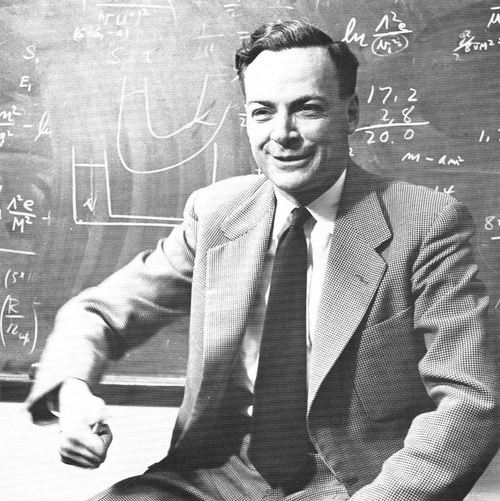
Richard P. Feynman (1918-1988) was an American theoretical physicist known for making difficult ideas feel intuitive without dumbing them down. He taught at Cornell and Caltech, won the 1965 Nobel Prize in Physics, and became one of the most influential science communicators of the 20th century.
Quick background
- Born: May 11, 1918, in Queens, New York
- Education: MIT (undergraduate), Princeton (PhD)
- Wartime work: Los Alamos, Manhattan Project
- Academic home: California Institute of Technology (Caltech)
- Nobel Prize: 1965, for work on quantum electrodynamics (QED)
Core contributions and greatest discoveries
1) Quantum Electrodynamics (QED)
Feynman helped build modern QED, the theory of how light and matter interact. His approach produced predictions that match experiments to extraordinary precision, making QED one of the most successful theories in all of science. He shared the 1965 Nobel Prize with Sin-Itiro Tomonaga and Julian Schwinger. His Nobel lecture describes how he developed his approach.
2) Feynman diagrams
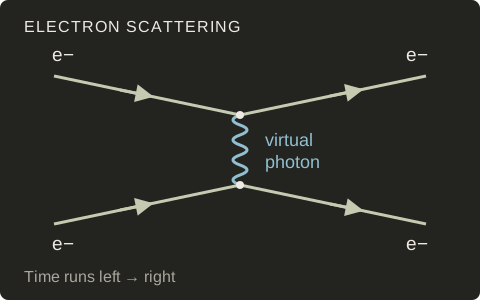
He introduced diagram-based calculations that turned abstract math into visual interaction maps. Here, the straight lines represent electrons and the wavy line represents a virtual photon exchanged between them.
Each diagram stands for a mathematical contribution to an interaction's amplitude; the lines are not literal particle tracks. This is one of the simplest contributions to electron-electron scattering.
Original explanatory diagram · click to enlarge. How the diagrams work — Caltech.3) Path integral formulation
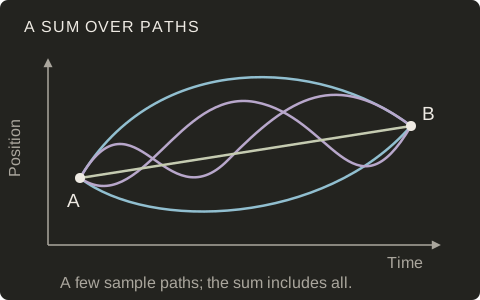
Feynman reframed quantum mechanics as a sum over all possible paths between two endpoints. The sketch shows just a few of them.
Each path contributes a probability amplitude with a phase. These contributions can reinforce or cancel one another; the squared magnitude of the total amplitude gives the probability.
Original explanatory diagram · click to enlarge. Feynman's explanation — Caltech.4) Superfluid helium and condensed matter physics
He explained important features of superfluid helium and quasiparticle behavior, extending his impact beyond particle physics into many-body systems.
5) Parton model in high-energy physics
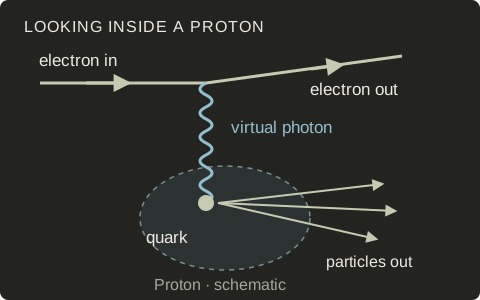
Feynman's parton model treated fast-moving protons as collections of smaller constituents. It helped explain deep inelastic scattering: a high-energy electron probes a constituent inside the proton.
In the modern picture, partons are quarks and gluons. This simplified sketch highlights a struck quark; the proton's other constituents are omitted.
Original explanatory diagram · click to enlarge. The experimental story — Jerome Friedman's Nobel lecture.The "6 rules of physics" question
Feynman was not known for a canonical "6 rules of physics." The common reference is Six Easy Pieces, a collection of his introductory physics lectures from Caltech. Those lectures are one reason he is remembered as such a clear and original teacher.
His lectures are available to read through Caltech.
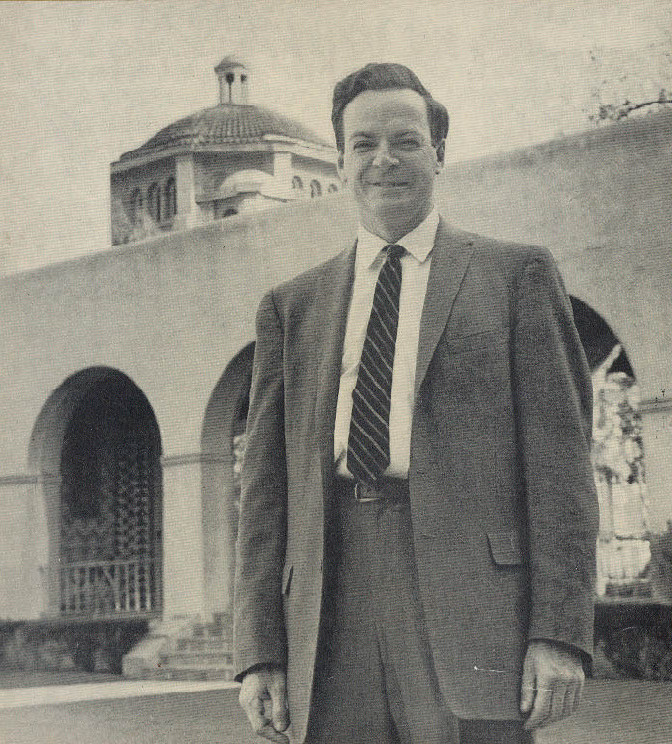
Photo: Feynman, circa 1960, published in Caltech's Engineering and Science. Photo source (public domain in the U.S.).Broader legacy
- Teaching: The Feynman Lectures on Physics remain a classic worldwide
- Communication: He made first-principles thinking popular beyond academia
- Public service: Played a key role on the Rogers Commission after the Challenger disaster
- Scientific style: Emphasized honesty, curiosity, and testing ideas against reality