Science & Cosmology
Cyclic Universe
Could the Big Bang have been a transition rather than the beginning of everything? Cyclic cosmologies explore the idea that our universe is one chapter in a repeating cosmic history. Some propose contraction and a bounce; others connect an expanding universe's distant future to a new beginning. It's one of my favorite ideas about the nature of existence, though it remains unconfirmed.
"The universe bangs, expands, contracts, and bangs again—an eternal cosmic heartbeat."
The Core Idea
The hot Big Bang describes the universe's early hot, dense phase and its subsequent expansion. Cyclic models ask whether something came before it and whether similar phases can recur. In a bouncing model, contraction gives way to expansion. A bounce would need physics that avoids an infinite-density singularity; a Big Crunch does not automatically produce a new Big Bang.
Some proposals aim for an endless past and future. That is a possibility to investigate, not a conclusion established by observation. Expansion means distances growing within space, not an explosion into an empty room outside it.
Historical Origins
The idea of a cyclical cosmos isn't new—it appears in ancient Hindu cosmology (the cycles of Brahma), Stoic philosophy, and various other traditions. In modern physics, Richard Tolman explored oscillating-universe models in the 1930s.
However, classical oscillating models had a problem: entropy. Each cycle would accumulate more disorder, changing later cycles and making a simple, eternally repeating picture difficult. Modern proposals must explain how they handle this problem.
Modern Cyclic Models
Several modern theories have revived and refined the cyclic concept:
Ekpyrotic / cyclic cosmology · contraction and renewal
Steinhardt and Turok's cyclic proposal includes expansion, a slow contraction phase, and a transition to renewed expansion. Early versions were motivated by colliding branes in extra dimensions; cyclic scenarios can also be described with four-dimensional fields. Authors' introduction.
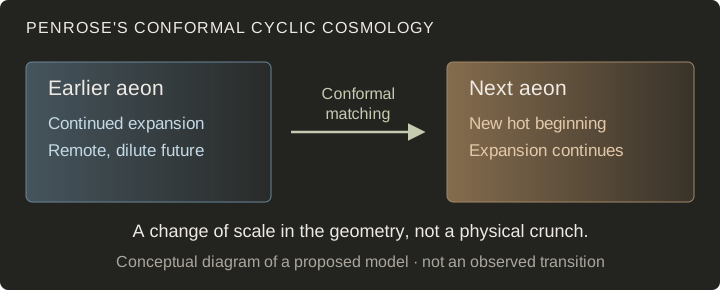
Conformal cyclic cosmology · Penrose's successive aeons
Roger Penrose proposes that the remote expanding future of one cosmic era, or aeon, can be joined to the hot beginning of the next by a conformal change of scale. This proposal does not require the previous aeon to contract into a Big Crunch. Meissner and Penrose's account.
Loop quantum cosmology · a possible quantum bounce
In certain models inspired by loop quantum gravity, quantum effects replace a classical singularity with a bounce. A single bounce does not by itself establish an endless cycle. Research review.
The Big Bounce
A "Big Bounce" is a proposed transition from contraction to expansion, avoiding a singularity. Quantum effects provide a possible mechanism in loop quantum cosmology; other bouncing models use different ingredients. The animation above shows this transition schematically.
A bounce would offer one possible account of what preceded the hot Big Bang: an earlier contracting phase. Whether nature actually works this way remains an open question.
Why I Love This Theory
There's something deeply satisfying about the idea of an eternal, self-renewing cosmos. It reframes the question of "what came before?" through an elegant pattern—expansion, contraction, rebirth. The universe as a cosmic heartbeat, pulsing forever.
If an endless cyclic model were right, individual cosmic eras could end while existence continues. Every ending would contain the seeds of a new beginning. That's a beautiful possibility to think about.
Current Evidence
We observe an expanding universe, with evidence for accelerated expansion. A future contraction has not been established, and any model predicting one must account for these observations. NASA's overview of cosmic acceleration explains the evidence.
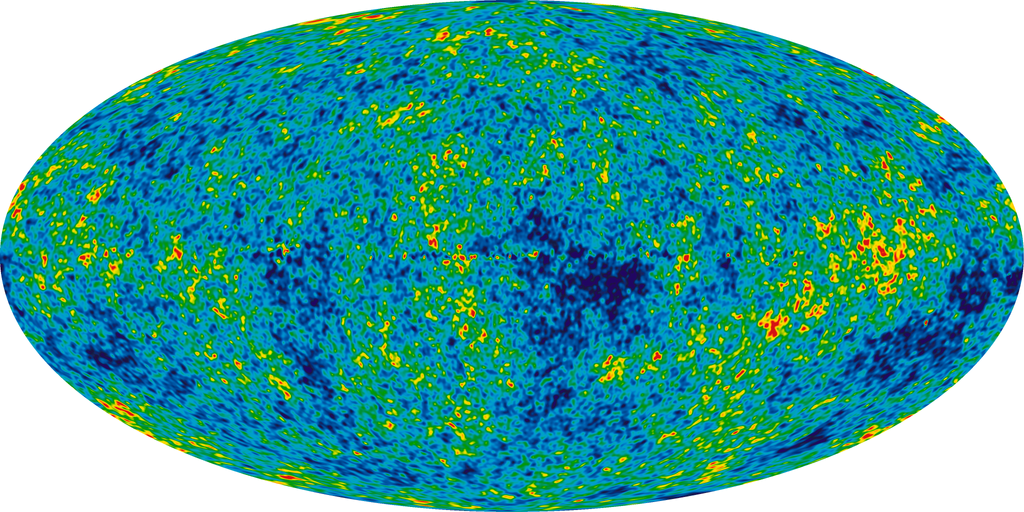
Penrose and collaborators have proposed possible signs of previous aeons in the cosmic microwave background, including circular patterns and "Hawking points." Independent analyses have found no statistically significant evidence for these claimed features. They are not established evidence of a previous universe. Read an independent search.
Key Concepts
- Big Crunch — The hypothetical collapse of the universe back to a singularity
- Big Bounce — A proposed transition from contraction to expansion without a singularity
- Brane Cosmology — The idea that our universe is a membrane in higher dimensions
- Entropy Problem — How cycles can repeat without accumulating disorder
- Conformal Rescaling — Changing geometric scale while preserving angles and light-cone structure
Further Reading
- Cycles of Time — Roger Penrose (Amazon)
- Endless Universe — Steinhardt & Turok (Amazon)
- Cosmos — Related wiki page on the TV series
- Black Holes — Related wiki page